Silent Scream: A Powerful Poetry Collection on Women’s Struggles, Pain, and Resilience by Fizza Bukhari

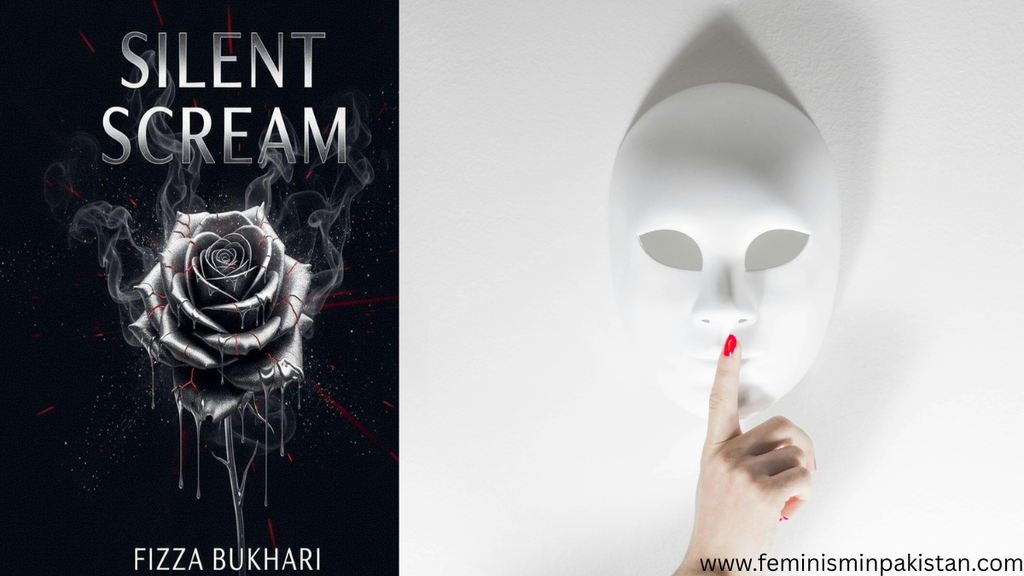
What happens when a woman carries a thousand unspoken emotions behind a smile? What happens when betrayal becomes a lesson, pain becomes a language, and silence becomes the only way to survive? These are the questions explored in this book, “Silent Scream” written by Fizza Bukhari. In this book the poetess and human rights activista tried to penned down the grim reality of our society.
This book was published on November 30, 2025, and is translated in eleven different languages. Fizza Bukhari as a woman tried to explores the hidden struggles of human life, the realities of womanhood, social injustice, betrayal, and the strength required to rise after hardship. This book invites readers to look beyond appearances and through its powerful imagery and expressive verses, it acknowledges the battles that often remain invisible to common people.
This book is designed especially for those readers, who really appreciate dark, emotional poetry and literature that challenges social norms, Silent Scream offers a compelling journey into pain, reflection, and rebellion.
The Invisible Wounds of Emotional Pain
Silent Scream is more than a collection of poems about sadness. It explores the complicated relationship between suffering, identity, power, and resilience. Its verses move between personal emotions and wider social realities, revealing how individual pain can reflect deeper inequalities within society.
The collection is organized into ten sections, including Shadows & Pain, Resonance of Pain, Reflection & Revelation, The Unheard Cry, The World Without Its Mask, and Fires of Rebellion. Each section approaches human suffering from a different perspective, connecting private emotional struggles with broader questions about justice, freedom, and humanity.
The poems address betrayal, loneliness, lost childhood, emotional wounds, hypocrisy, corruption, environmental destruction, and the oppression of women. Yet the collection also returns to an important idea: suffering does not have to be the final chapter of a person’s story.
Giving Voice to Women’s Inivisble Struggles
One of the most prominent themes in Silent Scream is the struggle of women living in societies where their identities and choices can be restricted by expectations, traditions, and unequal power structures.
In poems such as “The Woman’s Plight,” “In Man’s Society,” “Streets of Red,” and “Night of Rebellion,” Fizza Bukhari explores the emotional and social costs of silencing women. She tries to grab attention towards women’s unpaid labor, restricted freedom, overlooked suffering, and the pressure to remain quiet even when they experience injustice and their dignity is on stake.
Similarly, “Night of Rebellion” challenges the idea that a woman’s independence should be treated as shameful or unacceptable. The poem transforms walking freely and speaking openly into expressions of resistance.
The Invisible Wounds of Emotional Pain
Not every wound can be seen. Some are carried through memories, broken trust, loneliness, and experiences that people struggle to explain.
This is another central concern of Silent Scream. Poems such as “Broken,” “Hiding Scars,” “Chains of Silence,” and “Shattered Silence” explore the gap between outward appearances and inner experience.
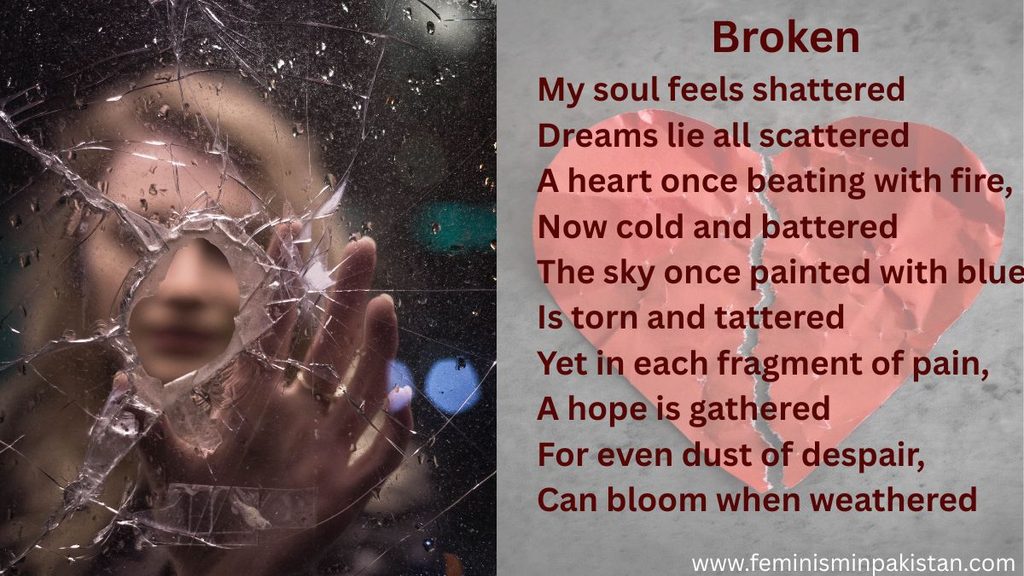
A person may continue working, smiling, and fulfilling responsibilities while privately struggling with overwhelming emotions. Others may see strength where there is exhaustion or silence where there is a desperate need to be understood. Through images of shattered objects, darkness, scars, and invisible battles, Bukhari gives poetic expression to these contradictions.
The collection also recognizes that healing is not always straightforward. Pain may leave lasting memories, but the ability to endure and begin again remains an important part of the human experience.
Betrayal, Trust, and the Masks People Wear
Trust can create a sense of safety, but betrayal can change the way a person understands relationships and human nature.
In “Betrayal,” the speaker reflects on giving time, trust, and loyalty to people who ultimately cause harm. The poem explores the shock of discovering that the people closest to us may not always have the intentions we believed they had.
Other poems, including “Hypocrisy,” “Mirror of Filth,” and “Ashes in Their Gaze,” examine the difference between public appearances and private behavior.
These works question the tendency to confuse respectable appearances with genuine integrity. A person may speak about morality while acting selfishly, or present an image of kindness while exploiting the trust of others. The recurring imagery of masks and shadows the idea that what people display to the world does not always reveal who they truly are.
Social Injustice, Corruption, and the Abuse of Power
In “The System,” Bukhari addresses economic inequality and the exploitation of people whose labor benefits those with greater power. The poem presents a world in which ordinary people struggle while powerful individuals protect their privileges.
“The Rot Within” explores corruption, dishonesty, and the erosion of public trust. Meanwhile, “Hell” portrays a society where justice appears weakened and those with wealth or influence seem able to escape accountability.
These poems highlight the suffering of poor people that can be produced on broader level by institutions, social hierarchies, and normalized injustice.
From Pain to Resistance: The Power of Rebellion
Pain and resistance exist side by side throughout Silent Scream. The collection does not present suffering as something that automatically makes a person stronger; instead, it repeatedly explores the struggle to recover a sense of agency after being hurt or silenced.
Poems such as “Crown of Shadows,” “Scared, Yet Unbroken,” “Sun,” and “Night of Rebellion” introduce speakers who refuse to let other people’s judgments define their identities.
In “Scared, Yet Unbroken,” the speaker confronts fears of being considered a burden, losing personal ambitions, and being forced into a life shaped by other people’s expectations. The poem ultimately turns toward self-determination and the right to claim a place in the world.
This movement from vulnerability to defiance is one of the collection’s defining patterns. Its speakers may feel wounded, isolated, or uncertain, but they continue to question the circumstances that limit them.
Nature, Darkness, and Symbolism in Silent Scream
In “Black Rose,” the rose becomes an image of beauty shaped by sorrow and betrayal. Its darkness suggests an experience that others may misunderstand but that still contains strength.
In “Poison Tree,” outward beauty conceals something harmful beneath the surface. The image becomes a metaphor for hidden resentment, deception, and the consequences of nurturing destructive emotions.
Similarly, “Screams of the Fallen,” gives a voice to a tree suffering from human destruction, and “Mother Nature’s Wrath,” that challenges the assumption that humanity can control the natural world without consequences. These metaphors in this poetry book, expand the collection beyond personal relationships where, “Darkness becomes a way to explore hidden truths, fire suggests anger and transformation, and the sky offers moments of hope amid uncertainty.”
These poems invite readers to question the social rules that determine whose voices are heard and whose suffering is ignored. This collection draws attention of those readers who are interested in feminist poetry, women’s empowerment, and literature about gender inequality, Silent Scream offers an emotionally charged exploration of these subjects.
About the Author
Fizza Bukhari is a Pakistani poet, novelist, and human rights activist whose writing explores human emotions, resilience, social injustice, and the experiences of people whose voices are often overlooked.
She is also one of the prominent feminist voices in the writer’s club. Her wider creative and advocacy work reflects an interest in storytelling, freedom of expression, women’s rights, and social justice.
Feminism in Pakistan is a place, where you can share your work related to gender issues and injustices. To explore more of her work, visit her author website: Fizza Bukhari Writes and if you are interested in reading her poetry then you can purchase her book from different online stores.